Sunday, May 8, 2016

Heat

Heat in chemistry is defined as the transfer of energy. We always measure the flow of heat energy, which always moves from a warm to a cold body. To calculate for heat, we use the equation Q = mcΔT, where Q is heat in joules and c is specific heat.

Helpful Links
https://www.phy.duke.edu/~rgb/Class/phy51/phy51/node59.html
http://physics.bu.edu/~duffy/py105/notes/Heattransfer.html

Thermodynamics

Thermodynamics is the study of energy transformations. Energy is defined as the ability to do work in physics. In chemistry, work is defined as directed energy change resulting from a process. Teo common forms of energy in chemistry are kinetic energy and potential energy. In a reaction, if there is an output of energy out of the system, then the reaction is exothermic. If there is an input of energy into the system, then the reaction is endothermic.

Thursday, May 5, 2016

Characteristics of Gases

In our calculations, we consider gasses to have no definite volume which means that they expand spontaneously. Other properties of gases include being highly compressible and able to form homogeneous mixtures. Boyle's Law also states that pressure and volume of gasses are inversely related. For instance, if the volume of a container increases, fewer collisions with the container occur which is interpreted as a decrease in pressure.

Helpful Links
http://www.chemteam.info/GasLaw/Gas-Boyle.html
http://www.iun.edu/~cpanhd/C101webnotes/gases/boyleslaw.html

Wednesday, May 4, 2016

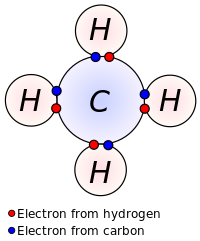
Covalent Bonds

Covalent bonds result from two nonmetal atoms sharing electrons. Both atoms share these electrons to fill their octet. When atoms of different elements share electrons through covalent bonding, the electron will be attracted more toward the atom with the higher electronegativity. This unequal sharing of atoms creates an electric dipole which makes the bond polar.

Helpful Links:
http://chemwiki.ucdavis.edu/Core/Theoretical_Chemistry/Chemical_Bonding/General_Principles_of_Chemical_Bonding/Covalent_Bonds
http://chemistry.tutorvista.com/physical-chemistry/covalent-bonding.html
quatr.us

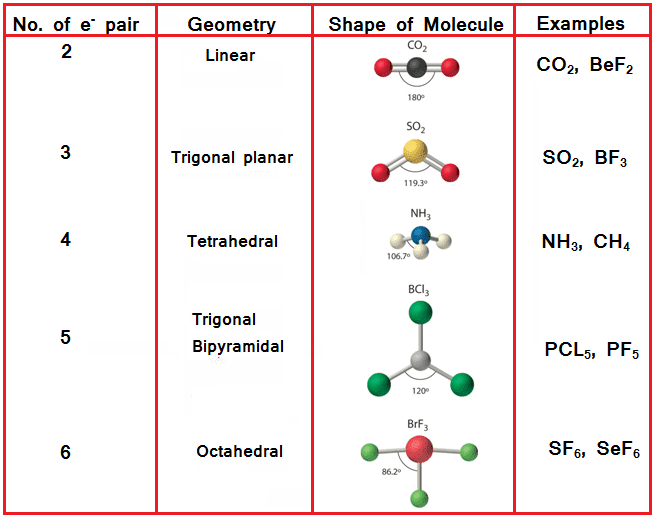
Molecular Geometry

Image result for vsepr theory exampleThe VSEPR theory is used to predict the molecular shape and function of a molecule. The way the molecule arrange themselves will depend on the number of lone pairs and bonded entities. Remember that a lone pair is a pair of electrons not shared between atoms. In this class, we only learn about five types of molecular geometries: tetrahedral, trigonal pyramidal, bent, linear, and trigonal planar. Remember that symmetry will result in a nonpolar molecule so tetrahedral, linear, and trigonal planar molecules are nonpolar.
Helpful Links

Thursday, April 14, 2016

Biodiesel Boat Race

After spending an entire day constructing our boats for the lab, we finally raced them today! Our boat finished but was not the fastest in the class. Speed depended on the composition of your boat and the quality of your biodiesel. The purer it is, the hotter it will burn which also makes the boat go faster. Unfortunately, the biodiesel of some groups eroded through the cups and spilled so they won't be using their own products. In the pictures below, you can see that our boats were very small as we only raced them in a rain gutter.


Friday, April 8, 2016

Biodiesel Day 2

Today we separated the biodiesel in our lab from the other useless liquids in our blend. We did this by letting it sit for a day for the solution to naturally separate first. Then we pipetted out the pure biodiesel that can be burnt. As you can see from the pictures below. we tested the fuel and it worked great!