Tuesday, May 10, 2016

The Ideal Gas Law

The Ideal Gas Law is where simpler laws such as Boyles law is derived from. As you can see, this law relates all the factors in a gas problem together. Keep in mind that this gas is an Ideal Gas which means that we neglect intermolecular forces and the volume of the molecules present. R is the universal gas constant which has the value .0821 L atm/mol K.


Helpful Links
http://www.chemguide.co.uk/physical/kt/idealgases.html
http://chemwiki.ucdavis.edu/Core/Physical_Chemistry/Physical_Properties_of_Matter/States_of_Matter/Gases/Gas_Laws/The_Ideal_Gas_Law
http://hyperphysics.phy-astr.gsu.edu/hbase/kinetic/idegas.html


Avogadro's LAw

Avogadro's Law tells us that for a gas at constant temperature and pressure, the volume is directly proportional to the number of moles of gas. For example, if the moles of a gas present is increased, the volume will increase in order for the pressure of the system to remain constant. Also, equal volumes of gasses at the same temperature and pressure have the same number of particles.

Helpful Links
http://www.chemistry.co.nz/avogadro.htm
http://www.britannica.com/science/Avogadros-law

Monday, May 9, 2016

Air Bag Lab

In this lab, we simulated the inflation of an airbag using a ziplock bag using baking soda and vinegar. To prevent the bag from not filling up or popping, we used stoichiometry and gas laws to calculate the right amount of both ingredients needed from the volume of the bag. To receive full credit, our teacher would pinch the bag and if both sides didn't touch or the bag didn't pop we would pass the lab. Luckily in our class, no one's bag popped and we all passed.


Sunday, May 8, 2016

Heat

Heat in chemistry is defined as the transfer of energy. We always measure the flow of heat energy, which always moves from a warm to a cold body. To calculate for heat, we use the equation Q = mcΔT, where Q is heat in joules and c is specific heat.

Helpful Links
https://www.phy.duke.edu/~rgb/Class/phy51/phy51/node59.html
http://physics.bu.edu/~duffy/py105/notes/Heattransfer.html

Thermodynamics

Thermodynamics is the study of energy transformations. Energy is defined as the ability to do work in physics. In chemistry, work is defined as directed energy change resulting from a process. Teo common forms of energy in chemistry are kinetic energy and potential energy. In a reaction, if there is an output of energy out of the system, then the reaction is exothermic. If there is an input of energy into the system, then the reaction is endothermic.

Thursday, May 5, 2016

Characteristics of Gases

In our calculations, we consider gasses to have no definite volume which means that they expand spontaneously. Other properties of gases include being highly compressible and able to form homogeneous mixtures. Boyle's Law also states that pressure and volume of gasses are inversely related. For instance, if the volume of a container increases, fewer collisions with the container occur which is interpreted as a decrease in pressure.

Helpful Links
http://www.chemteam.info/GasLaw/Gas-Boyle.html
http://www.iun.edu/~cpanhd/C101webnotes/gases/boyleslaw.html

Wednesday, May 4, 2016

Covalent Bonds

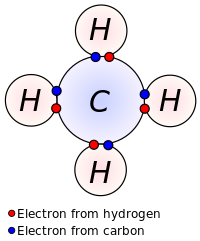
Covalent bonds result from two nonmetal atoms sharing electrons. Both atoms share these electrons to fill their octet. When atoms of different elements share electrons through covalent bonding, the electron will be attracted more toward the atom with the higher electronegativity. This unequal sharing of atoms creates an electric dipole which makes the bond polar.

Helpful Links:
http://chemwiki.ucdavis.edu/Core/Theoretical_Chemistry/Chemical_Bonding/General_Principles_of_Chemical_Bonding/Covalent_Bonds
http://chemistry.tutorvista.com/physical-chemistry/covalent-bonding.html
quatr.us

Molecular Geometry

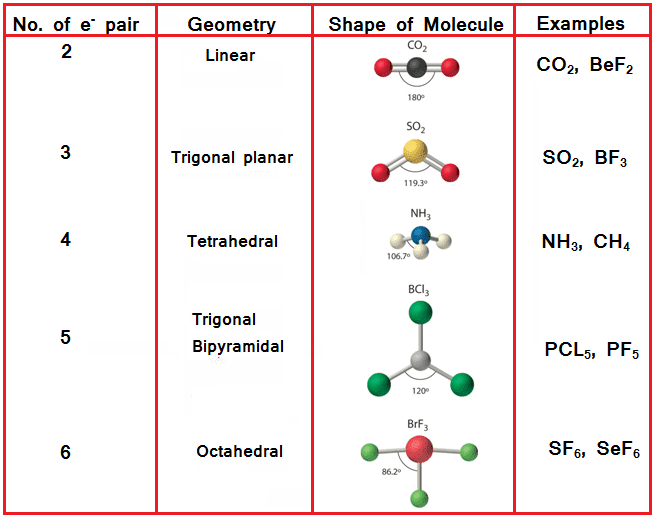
Image result for vsepr theory exampleThe VSEPR theory is used to predict the molecular shape and function of a molecule. The way the molecule arrange themselves will depend on the number of lone pairs and bonded entities. Remember that a lone pair is a pair of electrons not shared between atoms. In this class, we only learn about five types of molecular geometries: tetrahedral, trigonal pyramidal, bent, linear, and trigonal planar. Remember that symmetry will result in a nonpolar molecule so tetrahedral, linear, and trigonal planar molecules are nonpolar.
Helpful Links

Thursday, April 14, 2016

Biodiesel Boat Race

After spending an entire day constructing our boats for the lab, we finally raced them today! Our boat finished but was not the fastest in the class. Speed depended on the composition of your boat and the quality of your biodiesel. The purer it is, the hotter it will burn which also makes the boat go faster. Unfortunately, the biodiesel of some groups eroded through the cups and spilled so they won't be using their own products. In the pictures below, you can see that our boats were very small as we only raced them in a rain gutter.


Friday, April 8, 2016

Biodiesel Day 2

Today we separated the biodiesel in our lab from the other useless liquids in our blend. We did this by letting it sit for a day for the solution to naturally separate first. Then we pipetted out the pure biodiesel that can be burnt. As you can see from the pictures below. we tested the fuel and it worked great!


Thursday, April 7, 2016

Biodiesel Lab

Today we started the first step in our main lab of this biodiesel unit! We created a mixture of biodiesel that will be used to power a put-put boat in a race. By placing a combination of used fryer oil and potassium hydroxide in a hot water bath, we produced a blend that will have to be separated later for pure biodiesel.
Fryer oil


Hot water bath


Finished solution

Saturday, March 19, 2016

Bonding Exam

After taking the exam for this unit, I felt that I did pretty well on it. Even though we had no quiz, I studied a lot with the online practice tests. They really help you get familiar with every type of problem the test will throw at you so I strongly recommend that. Additionally, I looked at my book and my notes many times before the test to help remember all the content.

Monday, March 7, 2016

Unit Over

Recently, we just finished the unit and third quarter with the unit exam. I felt that it was fairly easy when compared to others. I knew all the concepts as there were not many questions that I got stuck on. Next time I should study for tests like I did with this one by doing the online quizzes and tests.

Periodic Trends

In this lecture, we learned about different trends in the periodic table such as atomic size, ionization energy, and electronegativity. They were odd for me at first but it just took some memorization and practice to get the hang of them. Videos such as these are also helpful for understanding why trends happen.

Saturday, March 5, 2016

Spectroscopic Analysis Lab

spectrophotometer
iws.collin.edu
In this lab, we used a piece of equipment called the spectrophotometer to determine the absorbance and transmittance of light with a cobalt and chromium ion in different wavelengths. The lab was pretty simple but we only had one class period to complete our data so me and my partner worked quickly. In the end, we got our data and transferred it to an Excel document to analyze it.

Sunday, February 28, 2016

Unit Quiz

The unit quiz was pretty easy compared to others. It had more questions than other quizzes but the concepts were more straightforward. The questions covered concepts from our lectures such as quantum numbers, electron configuration, and electromagnetic radiation. For me, I struggled a bit on naming the rules for electron configuration so I should focus some time on that.

Helpful Links
http://www.chem.wisc.edu/deptfiles/genchem/sstutorial/Text5/Tx54/tx54.html
https://www.khanacademy.org/science/chemistry/electronic-structure-of-atoms/electron-configurations-jay-sal/v/electron-configurations-2
http://chemwiki.ucdavis.edu/Core/Inorganic_Chemistry/Electronic_Structure_of_Atoms_and_Molecules/Electronic_Configurations

Friday, February 19, 2016

Flame Test Lab

In this first lab of our unit, we recorded the light given off by different metals when burning to determine the identity of an unknown atom. When atoms absorb energy, the electrons jump to a higher energy state and immediately fall back to ground state releasing that energy as light. Since each element has a unique arrangement of electrons, different colors will be emitted by each element. This lab was exciting with the bunsen burner but I was initially pretty confused with using the cobalt glass.


scholesscience.weebly.com
Barium

Electromagnetic Radiation

Recently, we learned about the wavelength, frequency, and energy of electromagnetic radiation. Wavelength is the distance from one crest to another on a wave while frequency is the number of cycles that pass through a point in one second. Energy is equal to the product of Planck's constant and frequency while frequency is the speed of light divided by wavelength. Converting between units such as nanometers and angstroms are also important for this unit since questions could be giving you different starting units.

Helpful Links
http://www.kentchemistry.com/links/AtomicStructure/waveequations.htm
http://chemwiki.ucdavis.edu/Core/Physical_Chemistry/Spectroscopy/Fundamentals/Electromagnetic_Radiation
http://www.chemteam.info/Electrons/calc-energy-freq-wavelength.html

Monday, February 15, 2016

Unknown Acid Lab

For the Unknown Acid lab, we basically performed the same procedure involving titrations from the Acetic Acid lab. The difference was that we had to determine the molar mass of the acids. We created our own procedure and used titrations to reach the molar mass. In the end, the acid ended up being the Asprin we made first semester.

Unit Exam

Before the unit test on Thursday, I was pretty anxious about the test because of many people saying it was hard. Despite this, I actually thought the exam was not extremely difficult although I struggled with a few questions. This will probably be one of the units I will have to review a lot for the final.

Helpful Links
https://www.khanacademy.org/science/chemistry/acid-base-equilibrium/titrations/v/titration-introduction
https://www.youtube.com/watch?v=XjFNmfLv9_Q